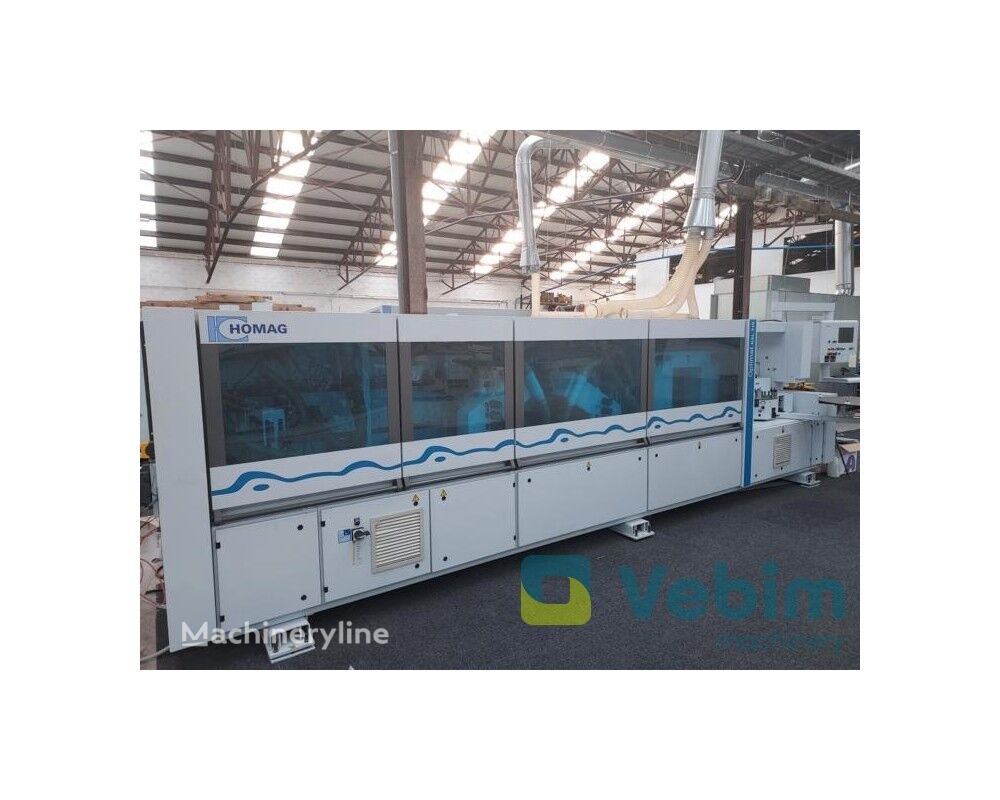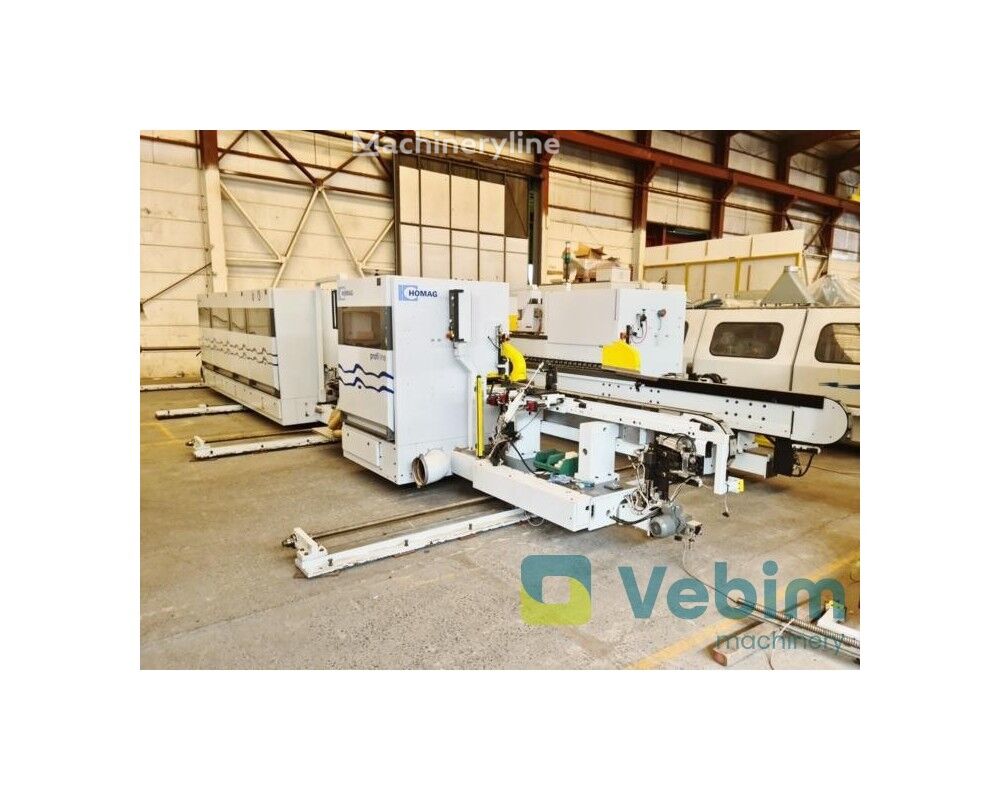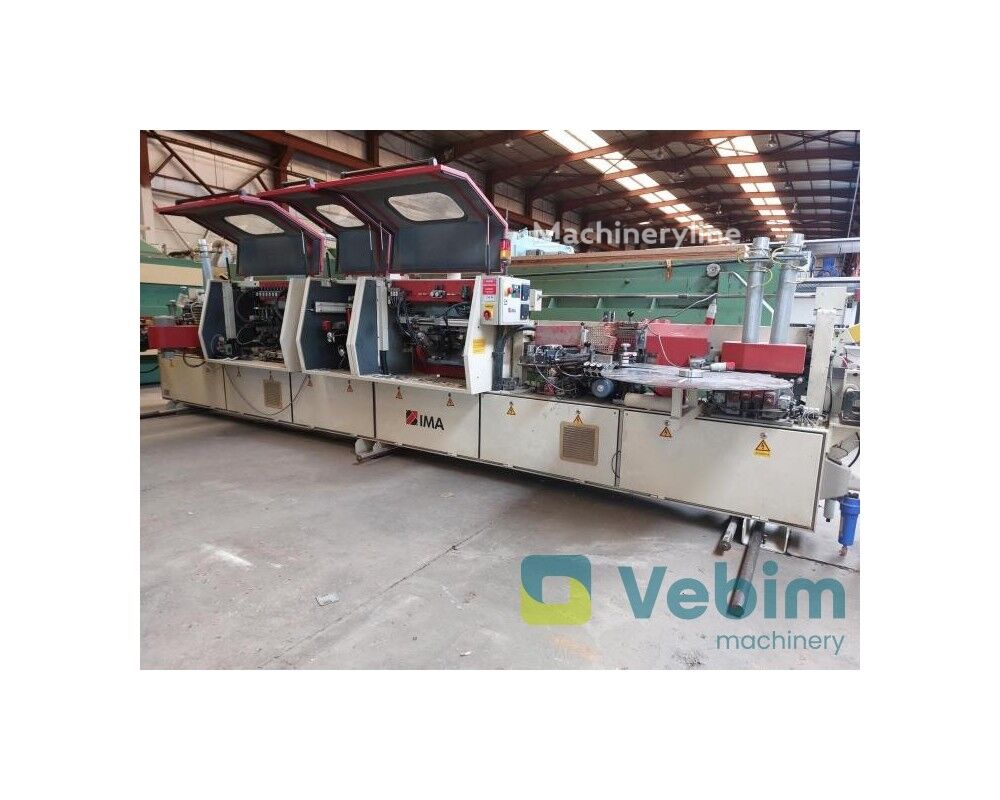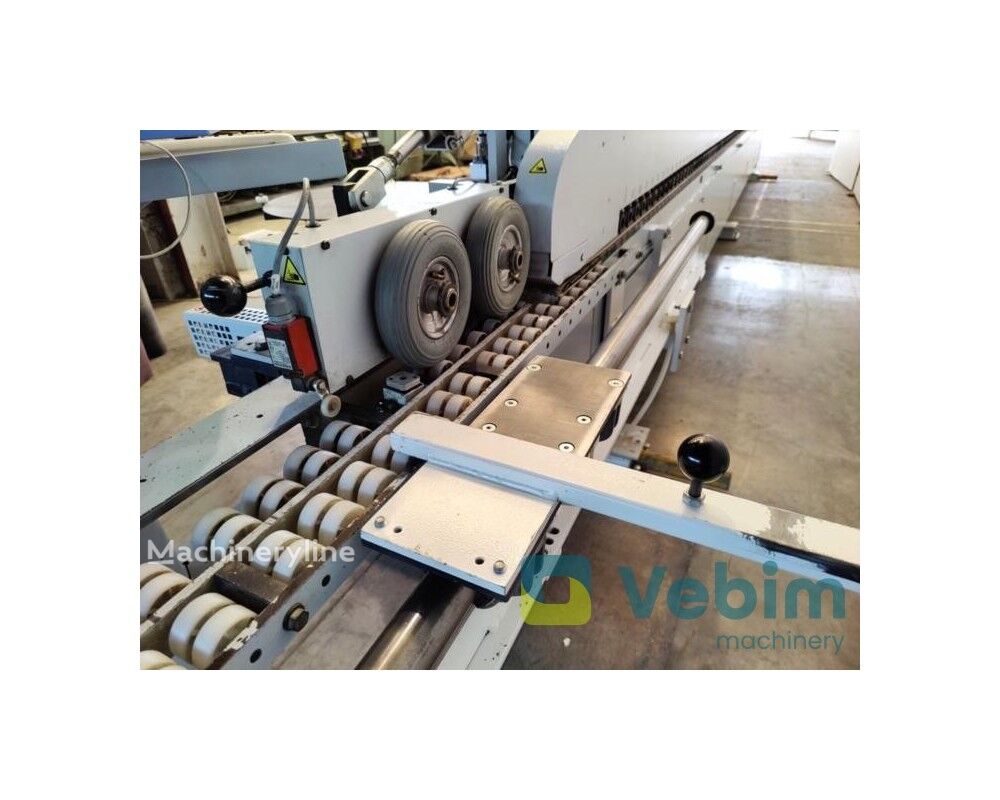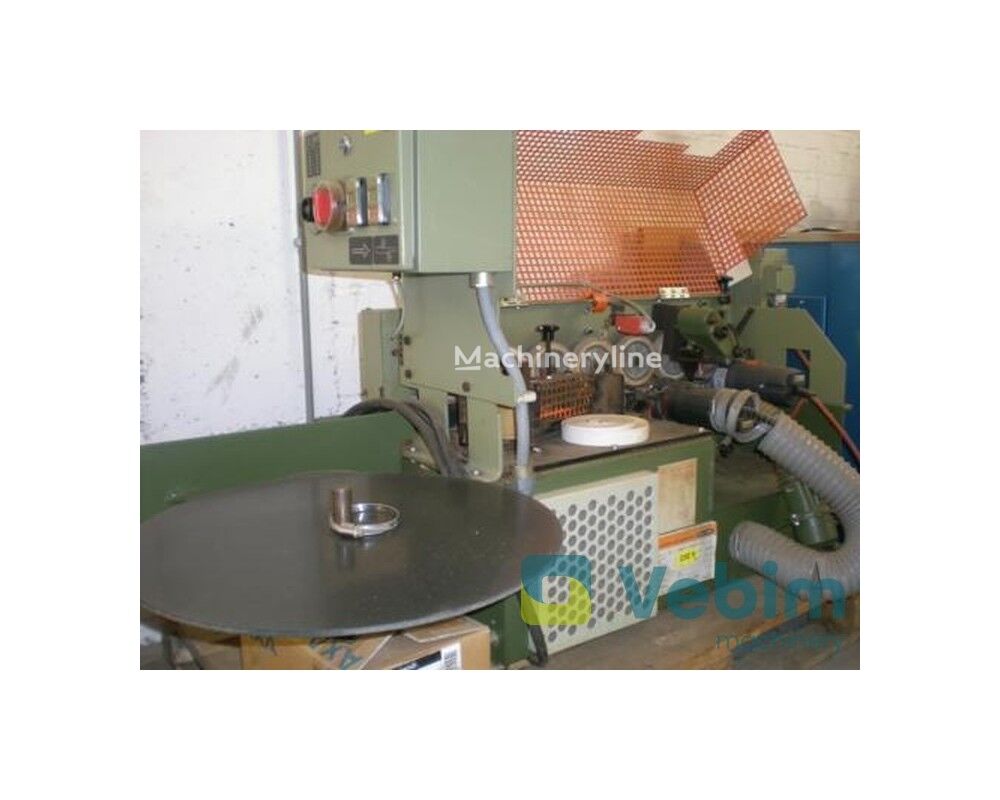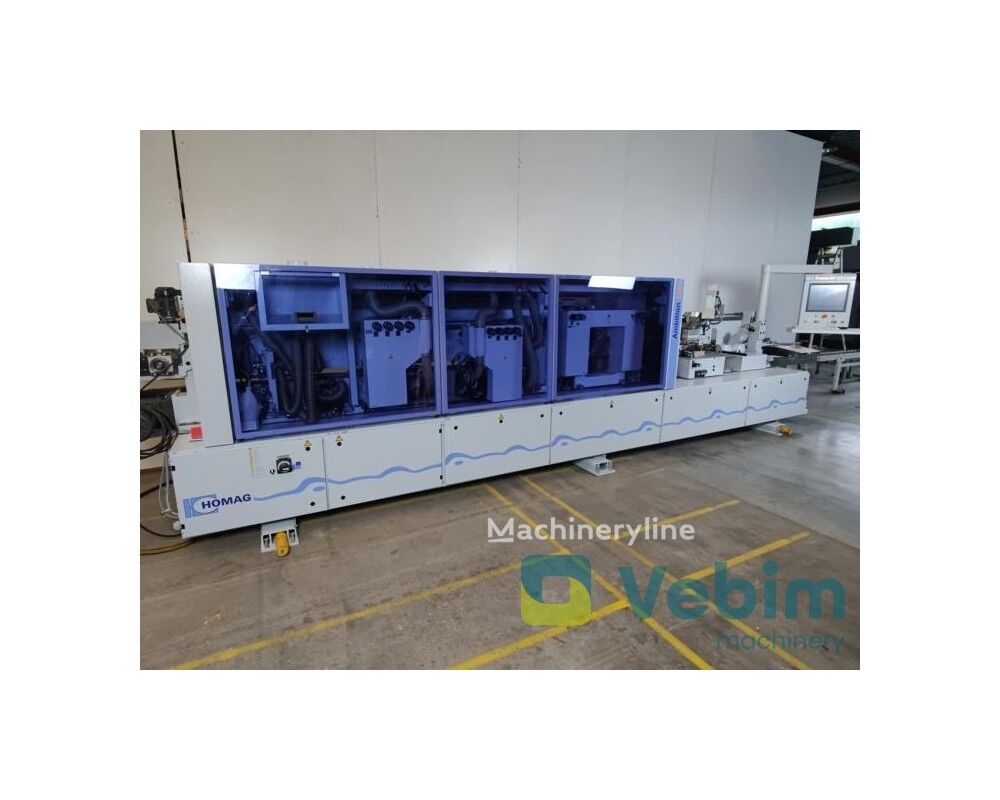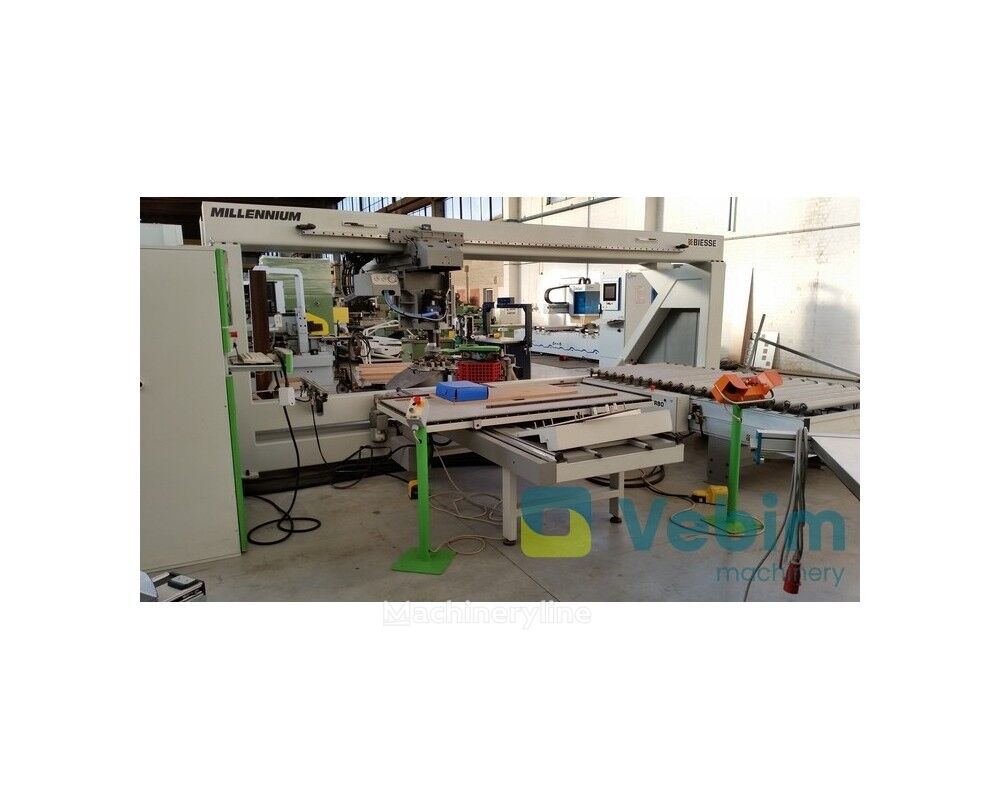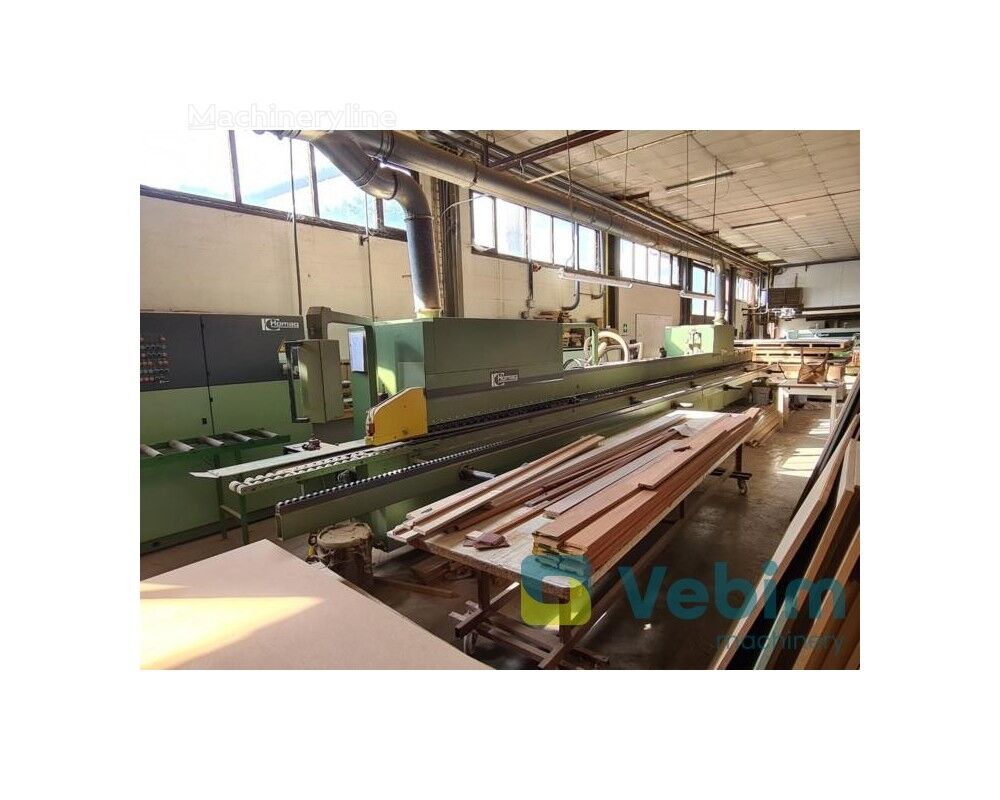
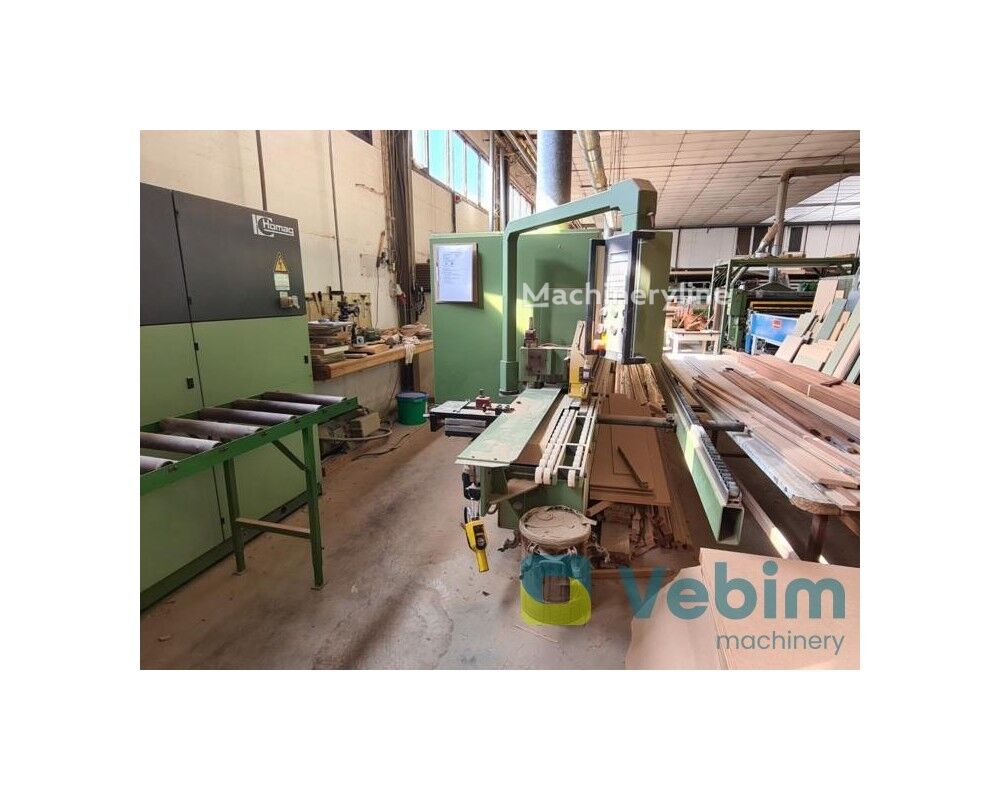
This Homag VFL 79 02 is a used edge bander — sometimes referred to as an edge banding machine — built in 1993 and currently located in Belgium. Edge banders are woodworking machines designed to apply and finish edge materials, typically laminates or veneers, to the exposed edges of panel-based components such as furniture boards, kitchen fronts, and worktops. Homag is a well-established German manufacturer recognised worldwide for its range of woodworking machinery, supplying the furniture, joinery, and panel processing industries with equipment that spans sawing, routing, drilling, and edge processing.
This particular machine is a single-sided postforming line, meaning it is purpose-built to apply laminates not just to flat edges but around shaped or profiled edges as well. It is capable of processing both L-profiles and U-profiles, with or without an insert or inlay, which makes it considerably more versatile than a standard flat edge bander. The machine carries serial number and operates with a variable feed speed of 3 to 18 metres per minute, accommodating a range of production tempos. It accepts workpieces between 16 mm and 60 mm in thickness, with a minimum workpiece width of 150 mm, a workpiece overhang capacity of 70 mm, and a maximum laminate overhang of 105 mm. The fence is positioned on the left-hand side.
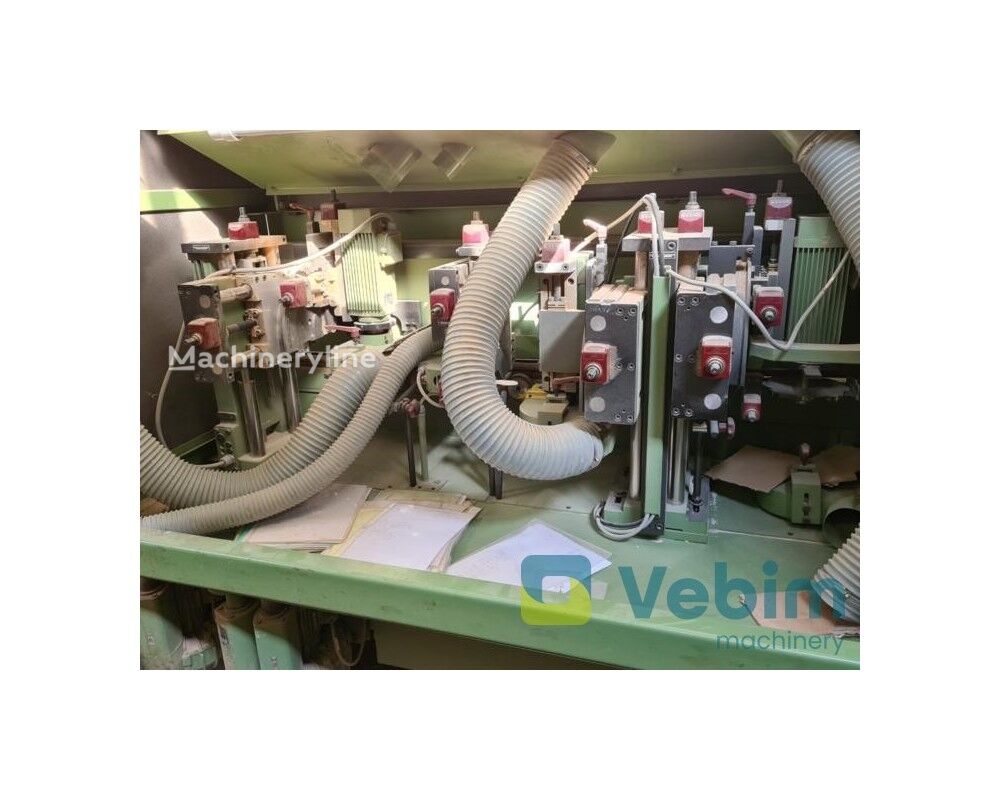
The squaring and shaping section at the infeed includes a postforming squaring unit driven by two motors of 1 kW each — the first removes the laminate, the second trims the overhanging material. There is also a top-position scoring unit, a milling unit for handling the laminate when processing U-profiles, and a laminate support.
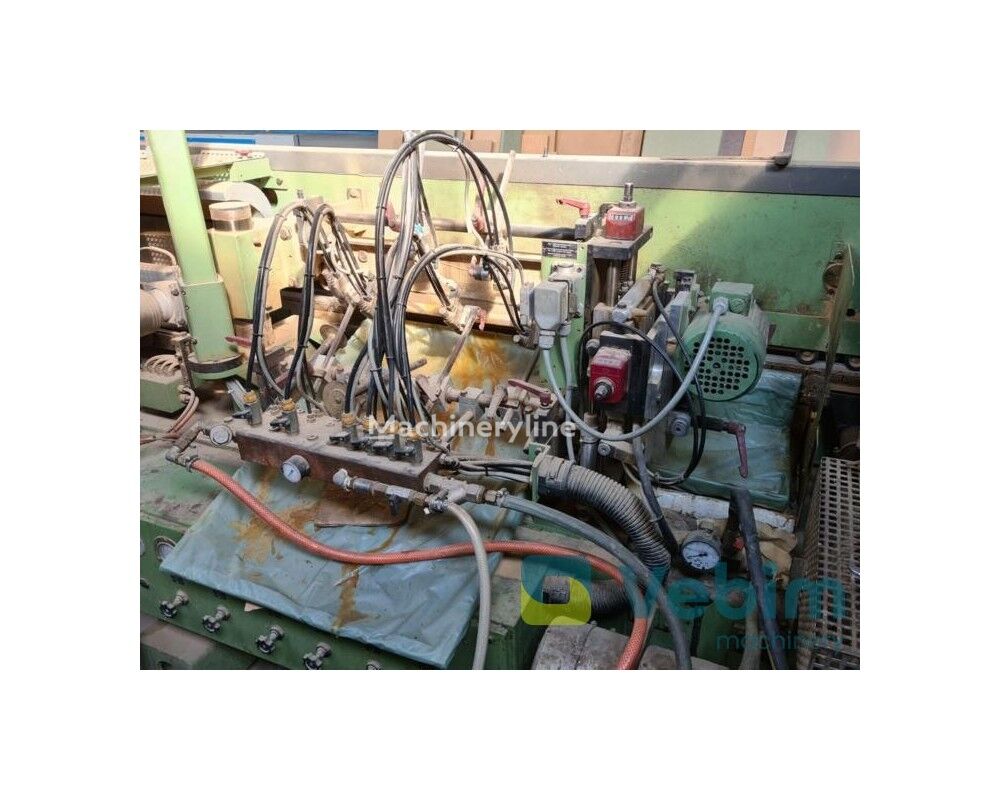
The postforming section is well equipped for applying and forming the laminate around the edge profile. Glue application is handled by six glue nozzles and two glue rollers. Heating is provided by nine infrared heating elements, each rated at 2.2 kW, supplemented by two hot-air blowers, each rated at 10 kW — a substantial heat input that supports reliable forming of the laminate around curved profiles. A blow cleaning nozzle prepares surfaces ahead of the process. Pressure is applied through three dedicated zones: a basic postforming pressure zone for L-profiles using rollers, a second basic postforming pressure zone for U-profiles also using rollers, and a VF postforming pressure zone for special profiles that uses pressure paths rather than rollers.
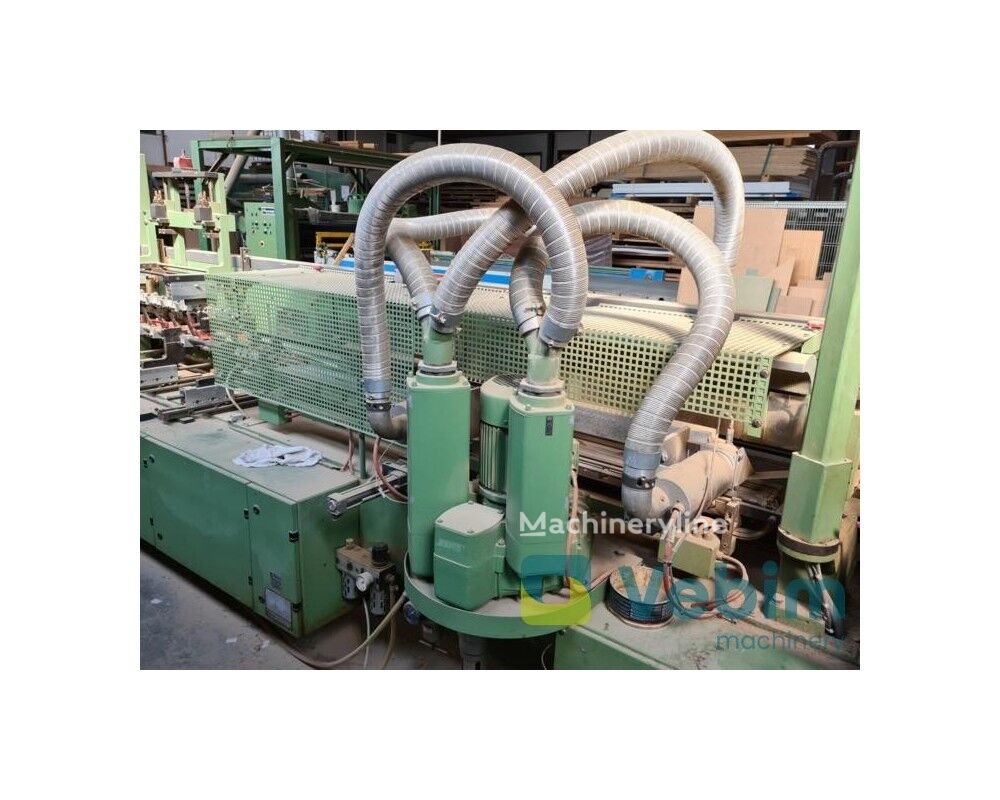
The finishing section rounds out the machine's capability. It includes a top fine trimming unit rated at 0.6 kW, a milling unit suitable for U-profiles or laminate grooving, and an additional basic postforming pressure zone for L-profiles with rollers. For insert or inlay work, the machine is fitted with an Insert/Inlay Grooving Unit UF13, an inlay and insert unit with PVAc glue application, a cleaning blower, and a top-feed insert supply mechanism. A top buffing unit completes the finishing sequence.
This description was generated automatically from the listing details and may not reflect every specification. Please confirm with the seller before purchase.