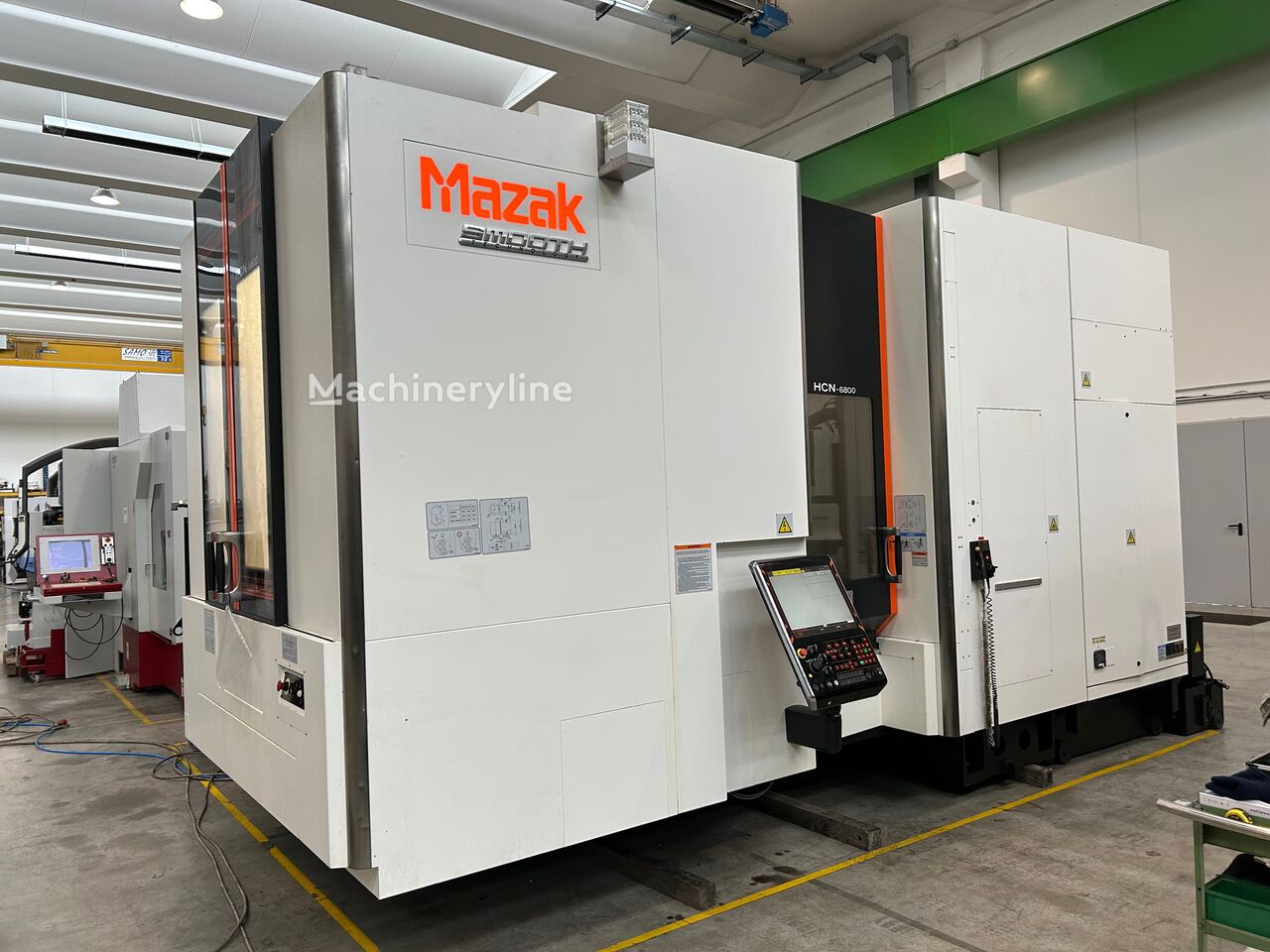
The Mori Seiki NZX SY is a used machining center — also commonly referred to as a CNC turning center or CNC lathe — built in 2016. Machining centers of this type are designed to perform precision turning, boring, drilling, and milling operations on metal workpieces, and are a mainstay of production engineering in the automotive, aerospace, and general manufacturing industries. Mori Seiki is a well-established Japanese machine tool builder with a long-standing reputation for producing high-precision CNC turning and milling equipment used in demanding industrial environments worldwide.
This machine is configured as a twin-spindle, twin-turret lathe running a FANUC 31iB control system. The dual-spindle arrangement allows simultaneous or sequential machining of both ends of a workpiece without manual intervention, significantly reducing cycle times in high-volume production. Each turret carries 16 tool positions — 32 positions in total across both turrets — giving the machine considerable tooling capacity for complex part programs. Driven tools are supported with a power rating of 7.5 kW (S1) / 5.5 kW (S6) and a tool shank cross section of 20 mm, enabling live milling and drilling operations directly on the turning center.
The main spindles are fitted with JIS A2-5 noses and have a through-hole diameter of 61 mm, accommodating bar stock up to 52 mm in diameter. Maximum turning diameter is 320 mm, and the swing diameter over the bed is 800 mm. Spindle speed runs from 0 to 6,000 rpm, driven by a spindle motor rated at 22 kW (S1) / 18.5 kW (S6), providing substantial torque for heavy cutting as well as the speed range required for finishing passes on smaller diameters.
Axis travels are as follows: the X-axis stroke is 210 mm, the Z-axis is served by a rapid traverse rate of 50 m/min, and the Y-axis — which enables off-centre milling and contour work — offers 110 mm of transversal travel with a rapid traverse of 20 m/min. The X-axis rapid traverse is 30 m/min. The Y-axis capability is a meaningful feature on a turning center, as it extends the range of prismatic features that can be produced in a single setup without moving the part to a separate machining center. The machine weighs approximately 8,100 kg, reflecting the substantial cast structure typical of a rigid, production-grade twin-spindle platform.
This description was generated automatically from the listing details and may not reflect every specification. Please confirm with the seller before purchase.